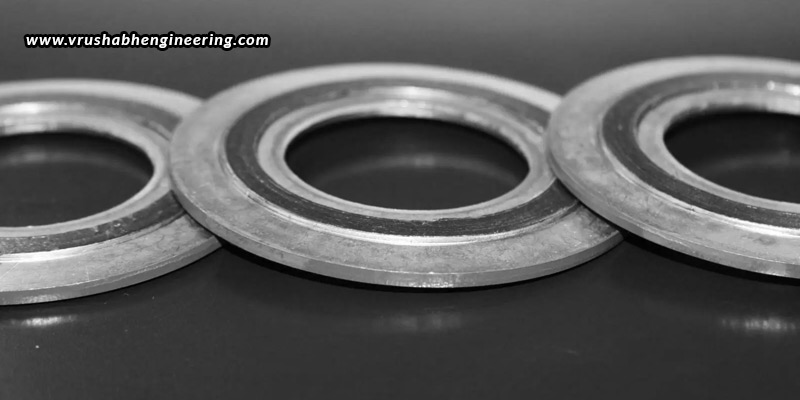
The winding pattern, design, and construction of a spiral wound gasket are what distinguish it from other types of gaskets. However, the materials used in a spiral wound gasket have an equally significant influence on how reliably it performs. The metal winding, the filler material, and supporting components must be carefully chosen, maintaining their quality and consistency during manufacturing. Material compatibility helps ensure that the gasket can withstand the temperature, pressure, and process media it encounters during service. At the same time, material consistency helps ensure that every gasket has predictable physical and sealing characteristics. When these two factors are considered together, they form an important foundation for reliable spiral wound gasket performance, service life, and leak prevention.
Why material selection matters in spiral wound gaskets
A spiral wound gasket combines different materials to achieve the required balance of strength, flexibility, resilience, and sealing capability. The metal winding provides structural support and helps the gasket withstand mechanical stresses, while the filler material helps create the sealing contact needed between the gasket and flange surfaces. The choice of these materials should be made carefully, considering the application and conditions in which they will be used. For instance, a gasket that will need to encounter corrosive chemicals may require a different material combination from one operating with high-temperature steam or hydrocarbons. Selecting materials based on actual service conditions therefore helps prevent premature deterioration and supports consistent sealing performance throughout the intended operating period.
Understanding material compatibility
Material compatibility refers to the ability of gasket materials to remain stable and functional when exposed to the conditions within the application. Moreover, prolonged exposure can also affect certain metals and filler materials. For instance, if the selected material reacts with the process fluid, it may experience corrosion, degradation, swelling, embrittlement, or loss of mechanical properties. Such changes can affect the gasket’s ability to maintain contact with the flange surfaces, and may eventually increase the risk of leakage. Also, a material that performs effectively at moderate temperatures may not retain the same properties when continuously exposed to higher temperatures. Similarly, repeated heating and cooling can place additional demands on the gasket materials as the components expand and contract. It is thus not only important to select a material that is durable, but one that can withstand both current and future challenging conditions associated with the application.
The metal winding material
The metal winding needs to withstand the mechanical and thermal conditions of the application, while maintaining the integrity of the wound structure. Different applications can require different metal materials depending on factors like corrosion resistance, operating temperature, pressure, and compatibility with the process medium. The winding material also contributes to the gasket’s ability to recover after compression. Upon installation, the gasket holds a different kind of compression. During operation, the changes in temperature and pressure may cause further compression and movement. The winding material thus needs to work effectively with the filler and overall gasket construction to maintain the required sealing characteristics, while also gaining back its original structure after operation. A suitable metal selection supports both structural stability and long-term sealing reliability.
The filler material
The properties of the filler material influence how effectively the gasket conforms to small irregularities on the flange surfaces and maintains sealing contact after installation. Different fillers have different temperature, chemical, and mechanical characteristics, which is why the choice of filler material depends on the process medium, temperature range, pressure conditions, and other service requirements. The filler must also retain its sealing properties throughout the expected operating cycle. Changes in temperature, pressure, or exposure to the process medium can affect its flexibility, resilience, and resistance to degradation. These factors are important when assessing how consistently the gasket can maintain contact over time. The filler selection should also be considered alongside the metal winding, rather than treating it like an isolated decision. The two materials need to work together to provide the required sealing performance.
Compatibility is about the complete gasket construction
Material compatibility does not stop with selecting a metal winding and filler that can withstand the process environment. The complete gasket construction must also be considered. A spiral wound gasket may include inner and outer rings, which also need to be appropriate for the conditions in which the gasket will be used. All the materials, from the metal to the filler and the inner and outer rings should work together without creating chemical interactions or differences in performance that could affect the seal. Each one’s thermal and mechanical characteristics can influence how the gasket responds to operating changes. This is why gasket specification should consider the complete material combination. Looking at individual components alone may overlook how those components behave when assembled into a finished gasket.
Why material consistency matters during manufacturing
Even when the correct materials have been selected, their performance depends on how consistently they are processed during manufacturing. Even slight variations in material properties or manufacturing conditions can affect the final product. Material consistency begins with incoming raw materials. The metal strip, filler material, and ring materials should meet the required specifications before entering production. Differences in thickness, dimensions, composition, or physical characteristics can influence winding quality and gasket performance. For example, variations in metal strip thickness can affect winding density and gasket dimensions, while differences in filler characteristics can influence compression and sealing behaviour. Material inconsistency may also affect flexibility, recovery, dimensional stability, and resistance to the operating environment. These variations may not always be visible during basic inspection but can influence performance under actual operating conditions. Maintaining consistent raw-material quality and manufacturing processes therefore helps reduce variations and provides greater control over the finished gasket.
Selecting a manufacturer with strong material controls
The quality of a spiral wound gasket depends not only on its design, materials, and consistency, but also on the manufacturer’s ability to control materials and production processes. A reliable manufacturer should have clear procedures for material selection, inspection, storage, processing, winding, dimensional control, and final quality verification. Manufacturers with strong material controls can maintain greater consistency in the raw materials entering production and reduce variations during manufacturing. For industries requiring spiral wound gaskets for different process environments, working with a manufacturer capable of supporting application-specific material selection can also simplify specification. Vrushabh Engineering is among the spiral wound gasket manufacturers in India, supporting application-specific requirements by helping align the metal, filler, and ring combination with service conditions, while maintaining consistent manufacturing and quality standards. Its focus on material selection and controlled production helps deliver gaskets suited to demanding sealing applications across different industries.
Reliable spiral wound gasket performance begins with choosing materials that are compatible with the application and continues with maintaining those materials consistently throughout manufacturing. The metal winding, filler, and supporting components must work together to withstand temperature, pressure, process media, and mechanical conditions. At the same time, consistent material properties, controlled winding, accurate dimensions, and thorough quality checks help ensure predictable performance from one gasket to the next. Considering material compatibility and consistency together provides a more complete approach to gasket quality, helping support dependable sealing, reduced leakage risks, and reliable operation across demanding industrial applications.