Industrial piping systems and process equipment operate under demanding conditions involving high pressure, temperature variations, vibration, and exposure to different process media. Maintaining reliable seals is essential to prevent leakage and ensure smooth operations. Frequent gasket failures can result in equipment shutdowns, unplanned maintenance, production delays, and higher operating costs, making the reliability of a spiral wound metallic gasket a critical consideration. Spiral wound gaskets are widely used in demanding flange connections due to their combination of metal windings and compressible filler materials. This construction helps maintain sealing contact while accommodating operating variations. When properly selected, manufactured, installed, and maintained, spiral wound gaskets provide dependable sealing performance, reduce gasket-related maintenance requirements, and support consistent industrial operations.
How spiral wound gasket design supports long-term sealing performance
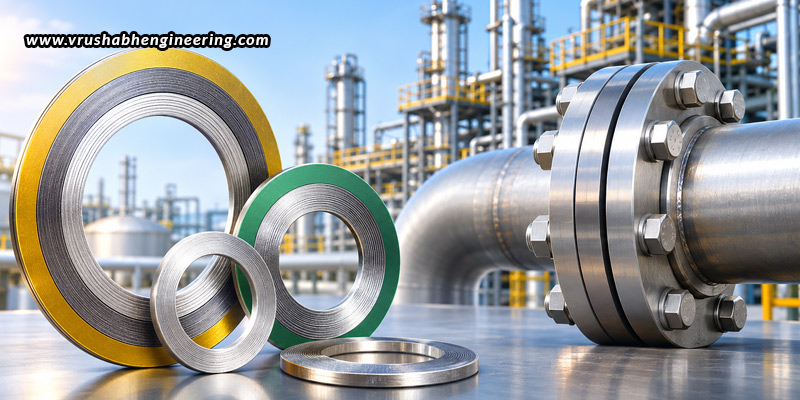
The construction of a spiral wound gasket plays a significant role in its service performance. It consists of alternating layers of metal winding and filler material, combining structural strength with compressibility. The metal winding provides support against mechanical loads, while the filler material conforms to minor irregularities on flange surfaces. When bolts are tightened, the gasket compresses between the flanges, creating the contact pressure needed to prevent leakage. Compression and recovery also influence sealing reliability. During operation, temperature, pressure, and mechanical variations can affect the flange joint. The metal winding allows partial recovery when compression conditions change, helping maintain contact with flange surfaces. This combination of strength, compressibility, and recovery enables spiral wound gaskets to accommodate normal operating variations, supporting long-term sealing performance and reducing the likelihood of premature replacement.
How material selection and operating conditions influence gasket service life
The service life of a spiral wound gasket depends significantly on selecting materials suited to the application. The metal winding and filler material must be compatible with the operating temperature, pressure, process medium, and other service conditions. Metal materials must provide adequate strength and resistance to corrosion, while fillers must retain their sealing properties in the process environment. Graphite, PTFE, and mica offer different temperature and chemical compatibility characteristics, making material selection application-specific. Operating conditions also influence material performance over time. High temperatures can affect filler stability, while pressure fluctuations and repeated heating and cooling place additional demands on the gasket. Selecting an appropriate material combination helps prevent premature deterioration, loss of flexibility, and reduced sealing capability, supporting longer service life and more predictable maintenance requirements.
Why manufacturing quality matters for long-term performance
Even when a spiral wound gasket uses suitable materials, its performance depends on manufacturing consistency. Variations in winding tension, filler placement, material thickness, and dimensions can affect its sealing behaviour. Uniform winding ensures consistent density, while accurate dimensions help the gasket fit the intended flange arrangement. Proper filler placement also supports predictable compression and sealing contact. Material quality is equally important. The metal strip, filler, and supporting components must meet specified requirements, as variations in their composition or physical properties can affect the finished gasket. Quality checks, including raw material verification, dimensional inspection, and visual examination, help identify defects before delivery. Consistent manufacturing ensures that the finished gasket meets its intended specifications, supporting reliable performance and reducing premature replacement.
How proper installation influences gasket longevity
Even a high-quality spiral wound metallic gasket may fail to achieve its intended service life if installed incorrectly. Installation determines whether the gasket receives uniform compression and maintains proper contact with the flange surfaces. Uneven bolt tightening can create inconsistent pressure distribution, causing excessive compression in some areas and insufficient sealing pressure in others. Incorrect alignment, damaged flange surfaces, and unsuitable gasket dimensions can further affect performance. Following the recommended installation procedure helps prevent these issues. Flange faces should be inspected for damage, dirt, and irregularities before positioning the gasket correctly. Bolts must then be tightened in the specified sequence and according to the recommended torque requirements. Proper installation ensures appropriate gasket compression, reduces leakage risks, and prevents avoidable assembly damage. This helps minimise premature replacements and unnecessary maintenance work.
How regular inspection helps prevent unexpected maintenance
Although spiral wound gaskets are designed for demanding applications, their sealing performance should not be assumed to remain unchanged indefinitely. Regular inspection of flange connections and associated equipment helps identify potential problems before they develop into serious operational issues. Visible leakage, corrosion around the joint, unusual operating changes, or repeated pressure loss may indicate that the gasket or flange connection requires attention. The underlying cause should be assessed before deciding whether replacement is necessary. Planned shutdowns and maintenance activities provide opportunities to examine flange surfaces, bolt integrity, alignment, and overall joint condition. These checks help identify factors that may affect sealing performance. A planned inspection approach allows industries to make informed maintenance decisions rather than relying on emergency repairs. Identifying potential issues early also helps schedule replacements, prevent unexpected downtime, and avoid extensive maintenance work.
Reducing maintenance requirements through the right gasket specification
Reducing gasket-related maintenance begins with selecting a configuration that matches the flange connection requirements. Factors such as pressure class, operating temperature, process medium, flange dimensions, and service conditions should be considered before specifying a spiral wound gasket. The winding material, filler, and overall construction must suit the application. While standard configurations may work in certain environments, demanding conditions may require specific material combinations or designs. The selected gasket should also meet relevant dimensional and design requirements. Incorrect specifications can create installation difficulties and compromise sealing performance. Working with an experienced manufacturer helps industries identify suitable configurations for their equipment. Vrushabh Engineering offers spiral wound metallic gasket solutions designed to meet diverse industrial sealing requirements. With a focus on material suitability, dimensional accuracy, and manufacturing consistency, the company supports reliable sealing performance across demanding applications.
Spiral wound gaskets can support long service life and reduced maintenance requirements when their design, materials, and construction are suited to the application. Their combination of metal windings and filler materials helps maintain sealing contact, while suitable material selection and manufacturing quality contribute to predictable performance. However, long-term reliability also depends on correct installation, operating conditions, and regular inspection. By considering these factors together, industries can reduce the risk of premature gasket failure, avoid unnecessary replacements, and maintain more reliable flange connections. Selecting the right gasket is therefore not just about achieving an effective seal during installation; it is also about supporting dependable performance throughout its intended service life.