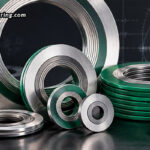
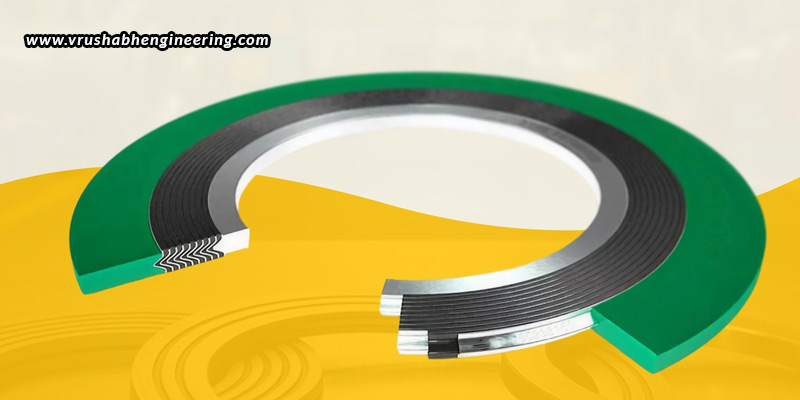
A gasket may be a relatively small component within a piping or equipment assembly, but its performance can have a direct impact on safety, efficiency, maintenance requirements, and process continuity. ASME spiral wound gaskets are trusted components, widely used in industries where conventional soft gaskets may not provide sufficient mechanical strength or resilience. Their combination of metallic winding and compressible filler allows them to accommodate flange irregularities while maintaining a seal through pressure and temperature fluctuations. Their use is especially important in industrial environments where hydrocarbons, steam, chemicals, seawater, and other demanding media are handled. This blog explores the major industries that rely on ASME spiral wound gaskets and explains why these sealing components are suitable for their operating requirements.
Why industries choose ASME spiral wound gaskets
ASME standards provide established requirements for the design, dimensions, materials, construction, and performance of components used in pressure-containing systems. They ensure that the components manufactured are according to recognized engineering requirements. ASME gaskets are dimensionally compatible that correspond correctly with mating flange systems, reducing the risk of compatibility issues during installation and maintenance. The importance of ASME standards includes:
- Establishing standardized dimensional requirements
- Supporting compatibility between mating flange components
- Providing recognized engineering requirements for systems
- Promoting consistency in component design and manufacturing
- Helping to specify suitable components
- Supporting reliable installation and maintenance practices
For industries operating under demanding pressure, temperature, and process conditions, following applicable ASME requirements provides a structured basis for selecting and specifying components.
Industries that rely on ASME-compliant gaskets
The below-mentioned industries operate under demanding conditions, making reliable, standardized gasket solutions essential for maintaining safe and efficient equipment connections.
- Oil and gas industry
The oil and gas industry requires components to operate under high pressure, elevated temperatures, and demanding process conditions, exposing them to crude oil, natural gas, refined products, steam, and other process fluids. The ability of spiral wound gaskets to maintain sealing performance during pressure and temperature changes makes them suitable for process piping, pressure vessels, heat exchangers, pumps and compressors, and valves and flanged connections.
- LNG and gas processing facilities
Gas processing and liquefaction facilities contain extensive piping networks and equipment operating under demanding temperature and pressure conditions. Flanged connections may be present around compressors, heat exchangers, separators, valves, and process piping. Systems here may encounter hydrocarbons, cryogenic conditions, elevated pressures, or significant temperature variations. Spiral wound gasket construction can be adapted to different service requirements through the selection of appropriate winding and filler materials.
- Refineries and petrochemical plants
Refineries and petrochemical facilities operate at high temperatures and pressures, while processing hydrocarbons and chemically reactive substances. A sealing failure in such an environment can result in process interruptions, product loss, equipment damage, or exposure to hazardous substances. Spiral wound gaskets manufactured to applicable ASME requirements are therefore used in critical flanged connections associated with heat exchangers, process piping, pumps, valves, pressure vessels, reactors, and distillation equipment.
- Chemical processing industry
Chemical processing facilities handle corrosive, toxic, reactive, and high-temperature fluids, making gasket selection particularly important. Material compatibility must be considered alongside operating temperature, pressure, flange construction, and fluid characteristics. ASME-compliant spiral wound gaskets may be used in chemical processing lines, heat exchangers, reactors, process vessels, and flanged connections associated with pumps and valves, where suitable for the operating conditions and specific process requirements of the facility.
- Power generation industry
Power generation facilities depend on numerous piping and equipment connections that handle steam, water, condensate, fuel, and other fluids, often under elevated temperatures and pressures. ASME-compliant gaskets are used in steam piping, heat exchangers, boilers, condensate systems, turbine-related systems, and flanged valves and piping. In these applications, gasket selection must account for operating temperature, pressure, flange design, and the effects of thermal expansion, contraction, and pressure fluctuations.
- Water treatment industry
Water treatment facilities present a different set of sealing challenges, where the gaskets need to handle seawater, treated water, chemicals, brine, and high-pressure streams. The gaskets are required in high-pressure piping, heat exchangers, water treatment equipment, and pumps and valves. Material selection is especially important as the material chosen must provide suitable corrosion resistance for the operating environment, while also remaining compatible with the specific fluids and service conditions involved.
For industries requiring dependable sealing components for demanding applications, working with an ASME spiral wound gasket manufacturer Oman can help ensure that gasket selection, material specifications, dimensions, and manufacturing requirements align with intended service conditions. Vrushabh Engineering is one such manufacturer that provides spiral wound gasket solutions for industrial flange applications where consistent sealing performance is essential.
How to select spiral wound gaskets for different industries
The fact that an industry commonly uses spiral wound gaskets does not mean that one gasket configuration will suit every application. Selection should be based on the actual service conditions.
- Operating pressure: The system’s operating and design pressure should be evaluated when determining the appropriate gasket configuration and pressure class. Higher-pressure systems may require additional gasket support, including suitable inner and outer ring configurations.
- Operating temperature: The selected materials should remain suitable throughout the expected operating temperature range. Thermal cycling should also be considered because repeated expansion and contraction can affect flange loading and gasket performance.
- Process medium: The fluid or gas being sealed is one of the most important selection factors. Consider whether the application involves chemicals, steam, process gases, seawater, hydrocarbons, or corrosive substances.
- Flange standard and pressure class: The gasket must correspond to the flange dimensions and applicable pressure class. ASME spiral wound gaskets are manufactured according to standardized requirements to support compatibility with applicable flange systems.
- Ring configuration: The application may require an outer ring, inner ring, or both. For critical applications, the appropriate configuration should be determined based on the applicable standard and engineering requirements.
ASME spiral wound gaskets play an important role across industries where reliable sealing is essential. Their ability to combine metallic strength with compressible filler materials makes spiral wound gaskets suitable for many high-pressure and high-temperature environments. However, their performance depends on more than gasket construction alone. Pressure, temperature, process media, flange design, pressure class, material compatibility, ring configuration, and installation practices must all be considered when selecting a gasket. For critical industrial systems, choosing an ASME-compliant spiral wound gasket that matches the actual service conditions provides a stronger foundation for safe, reliable, and long-term flange performance.