In industries where high pressures, extreme temperatures, and hazardous fluids are part of daily operations, seal integrity is not only important, it is essential. In these environments, even small leaks can lead to safety risks, shutdowns, environmental damage, and economic losses. In this regard, the ring joint gasket stands out. Unlike traditional gaskets, RTJ gaskets are designed to provide a metal-to-metal seal that can withstand the harshest operating conditions. But what exactly makes it so effective? The answer lies in the science of load distribution, material behaviour, and precision engineering. This blog covers the fundamentals that make RTJ gaskets a reliable sealing solution.
The basic sealing principle of RTJ gaskets
The effectiveness of RTJ gaskets is based on the notion of plastic deformation. When tightening the flange bolts, a compressive force is applied to the gasket. This force causes the gasket material to deform slightly and fit into the flange groove. Unlike soft seals that rely on compressibility, RTJ seals form a metal seal that fills in microscopic surface irregularities. This creates a strong barrier against liquid leakage even in extreme conditions. However, this deformation must be precisely controlled. Too little deformation can make the seal ineffective, and too much deformation can damage the seal and reduce its performance.
Load distribution: The key to perfect sealing
- Bolt load and contact stress
The sealing properties of an RTJ gasket depend on the contact stress created between the gasket and the flange groove when the bolts are properly tightened. Stress distribution is influenced by factors such as torque, bolt size, and flange stiffness. When applied correctly, the bolt load ensures uniform compression and eliminates leak paths. Uneven loading, however, creates weak spots that can lead to leakage under high-pressure conditions.
- Line contact and surface contact
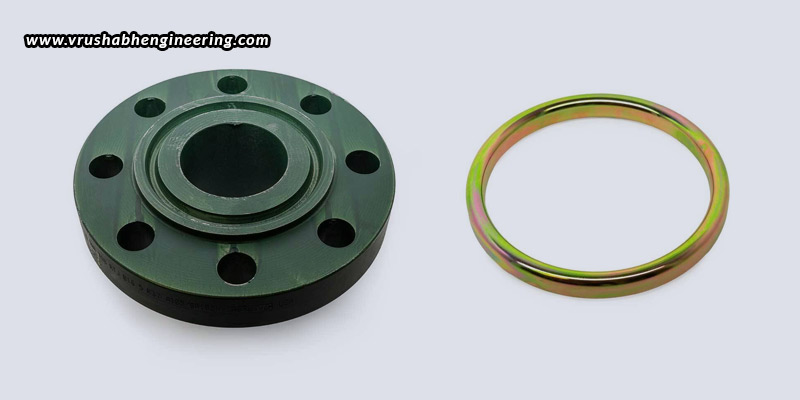
RTJ seals start sealing with a narrow contact line and spread over a wider area as the load increases. This controlled deformation improves load distribution and resistance to internal pressure, increasing compression efficiency. The shape of the gasket, such as oval or octagon, greatly influences how this transition occurs and determines the reliability of the gasket under different conditions.
- Controlled deformation
RTJ gaskets rely on a balance between elastic and plastic deformation for effective sealing. Elastic deformation helps accommodate pressure and temperature changes, while plastic deformation allows the gasket to conform permanently to flange imperfections. Achieving this balance ensures durability and a perfect seal. Too little deformation will cause leakage, but too much deformation will weaken the seal and cause failure.
How metal selection directly affects leak-proof sealing performance
Material selection is a critical factor in RTJ gasket performance. The gasket material should be softer than the flange to avoid damage to the groove, but at the same time maintain sufficient strength to support high loads and resist deformation under pressure. Common materials include mild iron, carbon steel, stainless steel grades such as 304 and 316, and various alloy steels for more severe conditions. Each material offers a unique combination of hardness, yield strength, temperature and corrosion resistance. Choosing the right material will ensure that the gasket functions reliably in the working environment. The wrong choice can result in poor sealing, accelerated wear, and premature failure.
How surface finish and precision machining ensure leak-proof sealing
Even with proper material selection and design, compaction performance can be reduced without proper surface preparation and precision machining. The flange groove should have a controlled surface finish: smooth enough to ensure proper seating of the gasket, but not too polished, as some roughness is necessary to maintain friction and prevent slippage. Excessive roughness can cause uneven compaction and stress concentrations, and excessively smooth surfaces can reduce adhesion and seal reliability. At the same time, RTJ gaskets are manufactured to tight tolerances to ensure a precise fit in the flange groove. This is because even small variations in dimensions can impede load distribution and cause leakage. Consistent manufacturing is therefore required to achieve reliable and durable seals.
How flange design supports consistent leak-proof sealing
Because RTJ gaskets function as part of a complete sealing system, flange design is critical to their performance. Key factors include groove shape, material compatibility, and flange stiffness. Proper groove dimensions ensure accurate gasket installation and optimal load transfer, and compatible materials prevent galvanic corrosion and wear. The rigid flange maintains uniform pressure on the gasket and prevents deformation under high loads or unstable conditions. This stability is essential to the long-term integrity of the seal. In contrast, even when high-quality RTJ gaskets are used, problems such as misalignment, distortion, and surface damage can disrupt the stress distribution, which can result in ineffective sealing and leakage.
How temperature and pressure conditions impact leak-proof sealing
Thermal and pressure conditions greatly influence the sealing performance of RTJ seals in demanding applications. Material compatibility is essential because in high-temperature environments, gasket and flange materials expand and the difference in expansion rates can change contact stresses, reducing sealing effectiveness and creating gaps. Additionally, many industrial systems operate under varying pressure conditions, subjecting the gasket to repeated stress cycles that can lead to fatigue over time. Although RTJ gaskets are designed to withstand these conditions, their long-term performance depends on appropriate material selection, precise design, and proper installation techniques to ensure continued seal integrity.
How proper installation ensures leak-proof sealing performance
Even the most advanced RTJ gaskets will not work effectively if they are not properly installed. The theoretical principles of sealing must be implemented accurately during assembly. The flange surface must be thoroughly cleaned of debris and dirt. The grooves should be checked for damage and the bolts should be tightened in a controlled cross pattern to ensure the load is evenly distributed. Applying the correct torque value is essential to achieving the desired level of compression without overloading the gasket. It is also important to note that RTJ seals are not designed to be reused. After plastic deformation, the ability to achieve a reliable seal is significantly reduced. Improper installation can result in uneven load distribution, insufficient seal strength, and premature failure.
Why quality directly determines leak-proof sealing performance
Considering the precision required in design, material selection, and manufacturing, quality is a key factor in ensuring the reliable performance of RTJ seals. High quality gaskets ensure a permanent seal even under extreme pressure and temperature conditions, reducing the risk of leaks and rupture. It also offers better resistance to deformation, fatigue and wear, ensuring long-term reliability. By extending life and maintaining seal integrity, it minimizes the need for frequent maintenance and replacement. These benefits not only improve operational safety but also reduce overall costs, making quality a necessity rather than an option in critical industrial applications.
Choosing the right manufacturer
While it’s important to understand the science behind the RTJ seal, it’s equally important to source from a manufacturer you can trust. A manufacturer that prioritizes precision machining, strict quality control, and material traceability can significantly influence sealing performance. For instance, companies like Vrushabh Engineering focus on manufacturing ring joint gaskets that meet the demands of high-pressure industrial applications. With focus on dimensional accuracy, material integrity, and consistent manufacturing standards, they ensure that the principles of leak-proof sealing are effectively translated into real-world performance.
The leak-proof performance of RTJ gaskets is not accidental but the result of a precisely engineered balance between load distribution, material properties, surface precision, and correct installation practices. From the application of bolt load to the controlled deformation of the gasket, every stage is governed by well-established scientific principles that ensure effective sealing. When these factors are properly aligned, RTJ gaskets provide reliable performance even under extreme pressure and temperature conditions. In critical industries where failure is not an option, understanding and applying this science is essential to achieving safety, operational reliability, and long-term efficiency while minimizing the risk of leaks and costly downtime.