Sealing technology may not always attract attention, but it is crucial for the safety, reliability, and efficiency of mechanical systems. Among the various sealing options, spiral wound gaskets are highly regarded for providing reliable seals in challenging operating environments. Their effectiveness stems from meticulous engineering that integrates material science with mechanical design. Made from alternating layers of metal and compressible filler materials, these gaskets strike a balance between strength and flexibility. This design enables them to endure pressure fluctuations, temperature changes, vibrations, and surface irregularities. Grasping the principles behind their construction helps explain why spiral wound gaskets continue to be a favoured sealing choice in a wide range of industrial applications.
Understanding the core structure of spiral wound gaskets
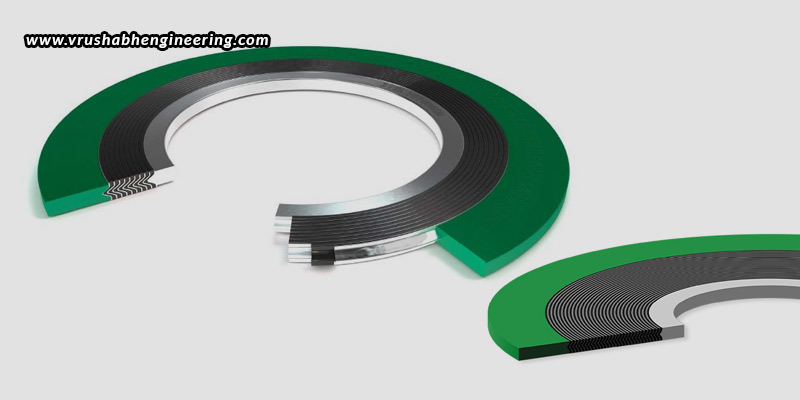
At first glance, spiral wound gaskets may seem straightforward. However, their true effectiveness is rooted in a meticulously designed structure that comprises three main components – metal windings, filler material, and optional inner and outer rings. These components collaborate to form a gasket that is both durable and versatile.
The metal and filler
The metal strip is shaped into a spiral and wound together with a soft filler material. This layered configuration provides mechanical strength while also allowing for compressibility. The filler material addresses minor surface imperfections on the flange, while the metal windings ensure structural integrity and even load distribution.
The rings
The optional inner and outer rings further improve the gasket’s functionality. The outer ring aids in centring the gasket during installation and regulates compression, while the inner ring safeguards against inward deformation and stabilizes the sealing surface.
This multi-layered construction enables the gasket to maintain both structural strength and sealing flexibility under varying operating conditions. By integrating metal reinforcement with compressible filler materials, it adjusts to pressure, temperature, and mechanical stress, while ensuring a dependable and consistent seal.
How the metal and filler work together
The performance of spiral wound gaskets is significantly influenced by the relationship between metal windings and filler materials. Each component plays a crucial role in the overall design.
Metal windings – Structural strength
The metal layers act as the mechanical foundation of the gasket, ensuring that the gasket retains its shape when compressed, and preventing excessive deformation under pressure. The metals also provide outstanding resistance to mechanical stress and fluctuations in temperature. Their durability guarantees that the gasket will not collapse or lose its structural integrity over time.
Filler materials – Sealing adaptability
While the metal contributes strength, the filler materials offer the necessary flexibility for effective sealing. These softer, compressible materials can adapt to minor imperfections on flange surfaces. Even flanges that are meticulously machined have microscopic irregularities. Without a compressible material to occupy these gaps, leaks may arise. The filler material effectively fills these minuscule spaces, establishing a continuous sealing barrier.
Together, the metal and filler create a well-balanced sealing system where structural strength is paired with flexibility, enabling the gasket to adjust to variations in pressure, temperature, and surface conditions.
The inner and outer rings
While the spiral winding serves the primary sealing role, the inner and outer rings boost gasket efficiency by enhancing alignment, regulating compression, and improving overall durability.
Outer ring
The outer ring functions as a centring guide during installation. It guarantees that the gasket is accurately positioned within the flange assembly, thus avoiding misalignment. Additionally, it restricts the amount of compression exerted on the gasket. By managing compression, the outer ring prevents excessive tightening, which could potentially harm the gasket.
Inner ring
The inner ring enhances the gasket’s structural integrity by preventing inward buckling when subjected to high pressure. It also shields the filler material from direct contact with the flowing medium. By serving as a protective barrier, the inner ring aids in maintaining gasket integrity and ensures sustained sealing performance.
Together, these rings improve structural stability, safeguard internal components, and guarantee uniform compression across the sealing surface, thereby contributing to dependable sealing performance under diverse operating conditions.
The spring-like elasticity
One of the key scientific principles that underlie the performance of spiral wound gaskets is elasticity. The metal windings function similarly to a spring when they are compressed between flange surfaces.
When the bolts are tightened, the gasket undergoes compression. Rather than staying rigid, the spiral design enables the metal layers to accumulate mechanical energy. This accumulated energy behaves like a spring, exerting pressure back against the flange surfaces and ensuring a steady contact pressure.
This spring-like characteristic is highly beneficial since operational systems seldom remain unchanged. Fluctuations in pressure, vibrations, and thermal variations continuously affect the connection between flange surfaces. A rigid gasket may lose its compression when conditions alter, but a spiral wound gasket is capable of adjusting and preserving its sealing force.
This capacity to recover and adapt is a fundamental reason why spiral wound gaskets demonstrate reliable performance in dynamic settings, ensuring consistent sealing effectiveness despite variations in pressure, temperature shifts, and mechanical movements.
The load distribution
Another key scientific principle that underpins the effectiveness of spiral wound gaskets is load distribution, which guarantees that sealing pressure is evenly applied across the flange surface, ensuring stable and reliable performance.
When bolts are tightened on a flange connection, a compressive force is exerted on the gasket. If this force is not evenly distributed, some areas of the gasket may endure excessive stress while others remain insufficiently compressed. This unevenness can result in premature failure.
The spiral design aids in evenly distributing compressive forces across the gasket surface. The metal windings serve as reinforcement layers that help to spread the load over a larger area. This design prevents stress concentration and minimizes the risk of deformation or leakage.
Consistent load distribution also enhances the lifespan of the gasket, as the material undergoes balanced compression instead of localized stress, which reduces damage and preserves reliable sealing performance.
Why the design continues to be effective
The core engineering principles that underpin the construction of spiral wound gaskets continue to be effective as they tackle essential sealing issues, such as pressure fluctuations, thermal expansion, mechanical vibrations, and surface irregularities.
- Ensuring compression under varying conditions
- Adjusting to surface flaws
- Evenly distributing load across the sealing surface
- Damping vibration and mechanical movement
- Managing thermal expansion and contraction
By effectively addressing these challenges through careful design, spiral wound gaskets provide reliable sealing performance. Their dependability stems from a well-balanced engineering approach that integrates materials, structural integrity, and mechanical adaptability.
Spiral wound gaskets demonstrate how thoughtful engineering can transform simple materials into highly effective sealing components. Their layered construction creates a sealing system that is both strong and adaptable. The science behind their design enables them to maintain reliable sealing performance despite fluctuations in pressure, temperature, and mechanical movement. Because of their engineering advantages, spiral wound gaskets remain a trusted choice for critical sealing applications across industries. Firms like Vrushabh Engineering, a renowned spiral wound gaskets manufacturer in India, apply these proven engineering principles and precision manufacturing practices to deliver sealing solutions that ensure consistent performance and long-term reliability in demanding industrial environments.