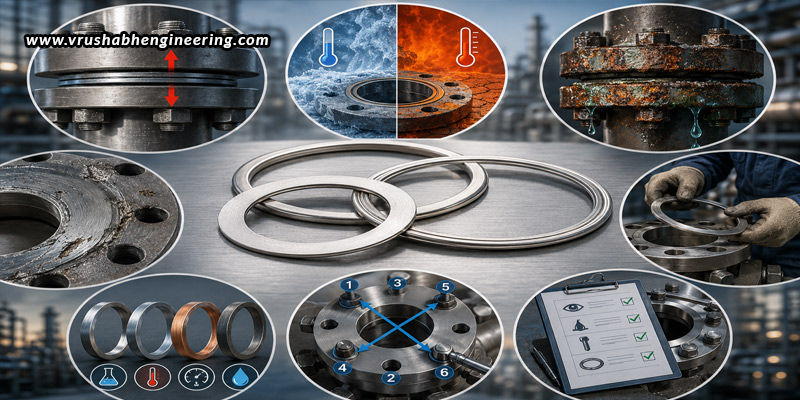
Metal rings for gaskets are widely regarded as one of the most dependable sealing solutions in industrial environments. Used across industries such as oil and gas, chemical processing, power generation, and manufacturing, these precision-engineered components help prevent leaks, maintain system integrity, and support safe operations under demanding conditions. Their ability to withstand high pressures, elevated temperatures, and corrosive media makes them ideal for critical applications. However, despite their durability, metal gasket rings can still fail due to factors such as fatigue, corrosion, improper installation, incorrect material selection, or inadequate maintenance. Understanding these common failure modes is essential for preventing leaks, minimizing downtime, extending gasket life, and ensuring reliable long-term performance in industrial systems.
Common reasons why metal gasket rings fail
Metal gasket rings are designed to create a secure seal between mating flange surfaces. To perform effectively, they must maintain adequate sealing stress throughout their service life. Any factor that compromises this sealing stress can lead to gasket failure. Common contributors include:
- Extreme pressure fluctuations
- Thermal cycling
- Chemical degradation
- Damaged flange surfaces
- Incorrect gasket selection
- Improper installation
- Poor maintenance practices
Extreme pressure fluctuations
Industrial systems rarely operate under perfectly constant conditions. Equipment startup and shutdown cycles, temperature variations, and pressure changes place repeated stress on gasket materials. Over time, these stresses can weaken the gasket and reduce its sealing effectiveness. Even small movements can eventually cause microscopic damage that grows into significant sealing issues and gasket fatigue. Early indicators of gasket fatigue may include small intermittent leaks, gradual loss of sealing performance, visible cracking or wear, and reduced gasket resilience. Because fatigue develops gradually, regular inspections are essential for identifying problems before complete failure occurs. The best way to prevent gasket fatigue is to minimize unnecessary stress on the gasket. Key preventive measures include:
- Selecting gasket materials suitable for expected pressure cycles
- Using gasket designs engineered for dynamic operating conditions
- Maintaining proper bolt torque
- Reducing excessive vibration where possible
- Monitoring operating conditions to prevent overload
Routine maintenance programs can also help identify fatigue-related deterioration before it leads to leakage.
Thermal cycling
Industrial equipment often experiences repeated heating and cooling cycles. As temperatures change, both the gasket and flange materials expand and contract. These movements can affect sealing stress and contribute to fatigue over time, leading to material fatigue, seal relaxation, and increased leakage risk. To reduce thermal cycling issues, the following measures should be taken:
- Selecting materials designed for expected temperature ranges
- Using appropriate gasket designs for thermal movement
- Monitoring operating temperatures
- Maintaining proper bolt loading
Chemical degradation
Metal gasket rings often operate in environments containing chemicals, moisture, steam, acids, alkalis, or corrosive gases. If the gasket material is not compatible with the process media, corrosion can gradually weaken the metal and compromise sealing performance. Unlike mechanical failures, corrosion may remain hidden until significant damage has already occurred. Corrosion can ultimately result in loss of sealing stress, surface damage, structural weakening, and leakage. In severe cases, corrosion can also damage flange surfaces, increasing repair costs. Preventing corrosion begins with:
- Matching gasket materials to the chemical environment
- Using corrosion-resistant alloys where necessary
- Avoiding mixing incompatible metals
- Reviewing chemical compatibility data before installation
- Maintaining clean operating conditions
- Conducting regular inspections for signs of chemical attack
Selecting the correct metal ring for the application significantly reduces the risk of corrosion-related failures.
Flange surface damage
Many gasket failures originate from damaged flange surfaces rather than the gasket itself. Some common flange issues include scratches, dents, warping, and surface irregularities. Corrosion can also be a reason. These defects prevent uniform gasket compression and can create leak paths. All of this can be prevented by following the below-mentioned practices before installation.
- Inspecting flange surfaces carefully
- Repairing damaged surfaces when possible
- Removing corrosion and debris
- Verifying flange flatness
- Ensuring that the surface finish meets application requirements
A properly prepared flange is essential for achieving optimal gasket performance.
Incorrect gasket selection
Using the wrong gasket for the application is a common but avoidable mistake. One wrong gasket selection can lead to leakage, corrosion, blowouts, accelerated wear, frequent replacements, and increased maintenance costs. This can be prevented by making the right choice.
A gasket that performs well in one environment may fail quickly in another. This is becomes important to consider some important factors when selecting the right metal gasket ring for the project, such as the operating pressure, temperature range, flange design, mechanical loads, chemical exposure, and industry standards; and choose a gasket that performs well in those operating conditions. Working closely with reputed gasket manufacturers and engineering teams can help identify the most suitable design and material combination for the intended operating conditions.
For industries seeking reliable metal rings for gaskets, Vrushabh Engineering offers precision-engineered solutions designed to meet demanding industrial requirements. With a focus on quality, material accuracy, and application-specific manufacturing, the company helps customers select metal gasket rings that deliver dependable sealing performance, enhanced durability, and long-term operational reliability across a wide range of industries.
Improper installation
Even a high-quality gasket that suits the operating conditions well can fail if installed incorrectly. In fact, installation-related errors account for a significant percentage of gasket failures across industries. Metal gasket rings rely on controlled compression to create an effective seal. If installation procedures are not followed correctly, the gasket may not receive the required sealing stress. This can lead to immediate leaks or premature failure during operation.
Some common installation mistakes include uneven bolt tightening, incorrect torque values, misaligned flanges, contaminated surfaces, and reusing single-use gaskets. The best practices for avoiding such installation issues include:
- Following manufacturer guidelines
- Using calibrated torque tools
- Applying bolt loads in proper sequences
- Inspecting flange alignment
- Cleaning all sealing surfaces thoroughly
- Replacing damaged or previously used gaskets when necessary
Poor maintenance practices
Without regular inspections, even well-designed gasket systems can fail. Potential consequences include loss of sealing stress, unexpected leaks, undetected corrosion, progressive fatigue damage, and unplanned downtime. A proactive maintenance program can help avoid such issues, which includes:
- Routine visual inspections
- Leak detection checks
- Bolt torque verification
- Flange condition assessments
- Scheduled gasket replacement when required
Metal gasket rings are engineered to provide reliable sealing performance in some of the most demanding industrial environments. However, factors like fatigue, corrosion, improper installation, damaged flange surfaces, incorrect material selection, and inadequate maintenance can compromise their effectiveness and lead to failure. However, most gasket failures are preventable. By selecting the right gasket material, ensuring proper installation procedures, maintaining flange integrity, and implementing regular inspection programs, industries can significantly reduce the risk of leaks and extend gasket service life. A well-chosen and properly maintained metal gasket ring not only improves operational reliability, but also enhances safety, reduces downtime, and lowers long-term maintenance costs, making it an essential component of efficient industrial operations.