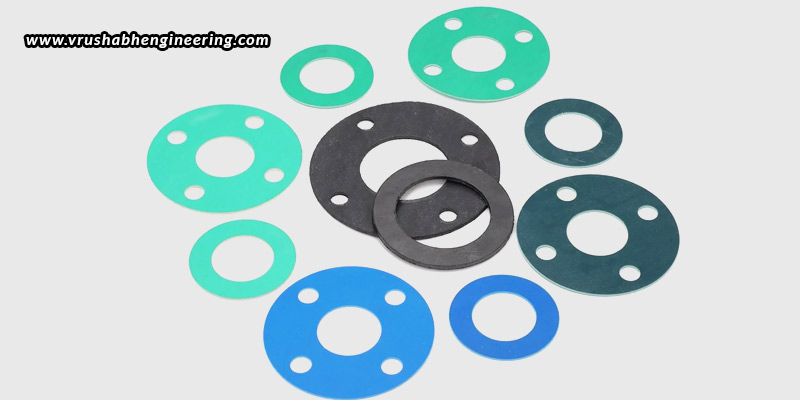
In industrial systems, even a minor leak can result in serious safety risks, production setbacks, and expensive repairs. This is why choosing the right gasket is a vital choice that directly impacts system efficiency and reliability. Non-metallic gaskets have emerged as a preferred option across various industries due to their flexibility, capacity to adapt to uneven surfaces, and cost-effectiveness. However, not all non-metallic gaskets exhibit the same performance under varying conditions. Selecting an unsuitable material can lead to leaks, contamination, equipment failure, and unexpected downtime. This blog explores the key factors to consider when choosing a non-metallic gasket, enabling engineers and maintenance professionals to make well-informed choices and ensure durable, reliable seals.
Key factors to consider when selecting a gasket
Selecting a non-metallic gasket requires evaluating multiple critical factors. These considerations ensure that the gasket performs reliably under all operating conditions.
- Temperature
Temperature is a critical factor in the selection of gaskets, as each gasket material has specific maximum and minimum temperature thresholds. Exceeding these thresholds can result in softening or melting of certain polymers or rubbers, leading to hardening or brittleness that may cause cracks and leaks, or a reduction in elasticity, which compromises the gasket’s sealing capability. For instance, PTFE can function effectively within a temperature range of -200°C to +260°C, making it well-suited for chemical and pharmaceutical uses. Graphite can endure temperatures as high as 500°C, making it appropriate for high-temperature steam and flue gas applications. Rubber materials like Nitrile, EPDM, and Viton generally operate between -50°C and 200°C, depending on their specific type, while elastomers provide a versatile temperature range for dynamic applications. When choosing a gasket, it is essential to take into account not only the operating temperature but also the potential for temperature variations over time, as cyclic thermal stresses can influence long-term performance.
- Pressure
The ability to handle pressure is a crucial factor in selecting gaskets. Gaskets for high-pressure systems must be able to endure compression without extruding or deforming, while those for low-pressure systems can utilize more flexible materials that enhance conformability. For high-pressure uses, materials such as filled PTFE, graphite, and aramid composites are favoured. Moderate-pressure applications typically employ rubber, silicone, or virgin PTFE, whereas soft, compressible materials like ePTFE or envelope gaskets are ideal for vacuum or low-pressure environments. Furthermore, gaskets are generally rated based on the pressure class of the flange or system, making it vital to choose a gasket that can maintain seal integrity at the maximum operating pressure.
- Chemical compatibility
Ensuring chemical compatibility is essential to avoid issues like corrosion, swelling, or degradation. Non-metallic gaskets do not have universal resistance to all chemicals, so it is important to verify compatibility meticulously. PTFE and graphite exhibit high resistance to acids and alkalis, while Nitrile, Viton, and fluoroelastomers are effective with oils and fuels. EPDM or graphite are frequently utilized for steam and hot water applications, and PTFE or Viton are preferred for solvents and hydrocarbons. Additionally, factors such as concentration, temperature, and exposure duration can affect chemical aggressiveness, so it is advisable to consult chemical compatibility charts from reputable gasket manufacturers.
- Flange and surface considerations
The type and condition of the flange are crucial when choosing the gasket. Surfaces that are uneven or rough typically necessitate the use of flexible materials such as rubber, ePTFE, or envelope gaskets, which can adapt to irregularities. Conversely, smooth or polished surfaces may require more rigid or reinforced gaskets, like graphite-filled PTFE, to avert blowout. For larger or irregular flanges, it may be essential to use thicker gaskets or multi-layered designs to guarantee uniform sealing. The gasket’s compressibility and recovery properties must align with the flange conditions to avoid leakage over time.
- Thickness
The thickness of the gasket is another critical factor in achieving an effective seal. Thicker gaskets offer improved sealing capabilities over uneven surfaces but may be susceptible to extrusion under high pressure. On the other hand, thinner gaskets are better suited for smooth flanges and high-pressure systems, although they require precise installation. For non-metallic gaskets, standard thicknesses generally range from 1 mm to 6 mm, with custom thicknesses also available. Manufacturers frequently offer recommendations on the optimal thickness for particular applications.
- Dynamic vs. Static applications
It is vital to determine whether the application is dynamic or static. In static applications with fixed flanges, most non-metallic materials perform effectively, as long as pressure, temperature, and media compatibility are upheld. In contrast, dynamic applications that involve vibration, movement, or cyclic stresses favour materials like ePTFE, reinforced elastomers, or flexible composites, due to their capacity to endure motion while ensuring a dependable seal. Recognizing the type of motion within the system is essential to prevent premature gasket failure.
- Environmental exposure
Environmental exposure can further influence the performance of gaskets. Materials that are subjected to UV radiation and sunlight, like EPDM and silicone, show resistance to degradation, while natural rubber may not withstand such conditions. Elastomers that possess ozone-resistant characteristics guarantee durability in outdoor settings, and moisture or humidity can weaken certain fibre-based gaskets, whereas PTFE and synthetic elastomers are resistant to water absorption. Choosing a gasket that can withstand environmental influences is just as important as selecting the appropriate material for the process media.
- Compliance and standards
Adhering to industry standards is vital for particular applications. Gaskets utilized in food, pharmaceuticals, and water treatment must comply with stringent certifications, including FDA compliance for contact with food or pharmaceutical items, NSF certification for drinking water applications, and ASTM or ISO standards to ensure reliability in mechanical and chemical performance. It is essential to confirm that the chosen gasket satisfies all relevant regulatory and industry standards to ensure safe and efficient operation.
Vrushabh Engineering: Your partner in non-metallic gasket solutions
Choosing the right gasket can be difficult without professional assistance. Vrushabh Engineering is dedicated to manufacturing high-quality non-metallic gasket material, including PTFE, rubber, graphite, elastomer, and composite options. With a strong focus on customizing gaskets for various industries and applications, Vrushabh Engineering guarantees reliable, long-lasting, and safe sealing solutions. Their team collaborates closely with clients to determine the best materials, thicknesses, and designs that align with specific operational needs, thereby enhancing performance, ensuring optimal sealing, and minimizing downtime. By providing tailored solutions, Vrushabh Engineering delivers non-metallic gaskets that consistently meet industry standards and operational requirements.
Selecting the right non-metallic gasket goes beyond merely choosing a material, it is a strategic choice that influences safety, efficiency, and reliability. Factors such as temperature, pressure, chemical compatibility, flange conditions, thickness, and environmental considerations must all be taken into account. By assessing these elements and seeking advice from experienced manufacturers, industries can ensure their systems remain leak-proof, compliant, and functional for many years. The right gasket safeguards your investment, boosts safety, and guarantees the seamless operation of essential systems, making careful selection a crucial aspect of industrial design and maintenance.