In every industrial system – from pipelines and engines to compressors and heat exchangers – gaskets serve a crucial yet often unnoticed function in ensuring smooth, leak-free operation. While their role is simple, achieving a reliable seal necessitates selecting the appropriate material for the specific application. An incorrect choice can lead to leakage, energy loss, contamination, downtime, or even significant equipment failure. Conversely, the right selection improves durability, efficiency, and safety. This blog provides an overview of essential gasket materials along with a practical guide for choosing the most suitable one for your operational requirements.
Why gasket material selection matters
Gasket performance is influenced by various factors, including pressure, temperature, media compatibility, and flange conditions. Choosing the wrong material can result in seal leakage under pressure, chemical degradation, thermal hardening or softening, creep and stress relaxation, mechanical wear, or even blowout, all of which contribute to higher maintenance and downtime expenses. As different materials react differently under stress – soft materials offering flexibility and compressibility, while harder materials provide enhanced resistance to extreme temperatures and pressures – understanding these characteristics is a vital first step in selecting the appropriate gasket.
Understanding key gasket material categories
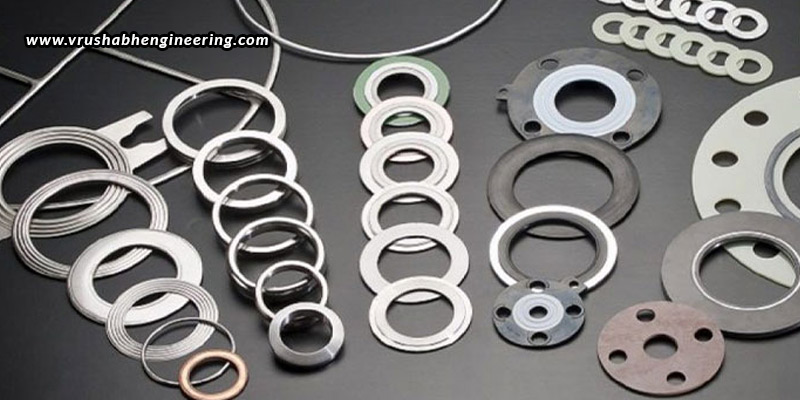
Gaskets are available in a diverse range of materials, each specifically designed to handle particular operational challenges. Below are the most frequently utilized types along with their performance characteristics:
- Non-metallic gaskets
Non-metallic gaskets are commonly employed in low-to-medium pressure settings due to their excellent compressibility and ease of installation. Rubber materials like Nitrile, EPDM, Neoprene, and Silicone provide flexible sealing solutions for water, air, oils, and mild chemicals. PTFE offers outstanding chemical resistance and a wide temperature range, making it suitable for highly corrosive, food-grade, and pharmaceutical applications. Graphite gaskets provide exceptional thermal stability and fire safety, ensuring reliable performance in steam systems, high-temperature pipelines, and situations with varying temperatures.
- Semi-metallic gaskets
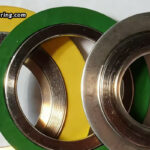
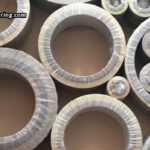
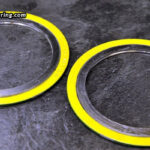
Semi-metallic gaskets merge the strength of metal with the adaptability of a soft filler material. Spiral wound gaskets, usually constructed with stainless steel windings and a graphite or PTFE filler, exhibit remarkable resistance to high pressure and temperature fluctuations. Their sturdy yet flexible design makes them a favoured option in challenging environments such as petrochemical facilities, refineries, and power generation plants.
- Metallic gaskets
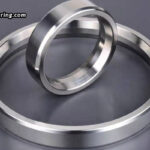
Metallic gaskets are designed for the most rigorous environments and can endure extreme pressure and temperature conditions. Ring-Type Joint (RTJ) gaskets are typically made from materials like carbon steel, stainless steel, Inconel, and Monel. Their solid-metal construction enables them to withstand pressures up to 20,000 psi, making them the preferred option for high-pressure oil and gas systems, subsea connections, and other critical sealing applications where absolute reliability is crucial.
Performance characteristics that define gasket materials
Choosing a gasket material requires an understanding of its behaviour under operational stress. The following are the key performance factors.
- Temperature resistance
Elevated temperatures can lead to gasket hardening, softening, chemical degradation, or a reduction in sealing load. Metals and graphite perform admirably under extreme heat, while rubber materials are constrained by their polymer structure. It is vital to match the gasket material with the operating temperature to preserve seal integrity and avert premature failure.
- Chemical compatibility
Exposure to chemicals is a primary cause of gasket failure, making compatibility a critical factor. PTFE is resistant to nearly all chemicals, Viton is effective with hydrocarbons and oils, and EPDM is excellent in steam and weather conditions but fails when exposed to oils. Selecting the appropriate material guarantees safe and durable sealing performance.
- Pressure handling
Various gaskets handle pressure in distinct ways. Metallic and semi-metallic types are ideal for high-pressure systems where strength is crucial, while rubber and fibre gaskets are appropriate for low-pressure applications. Spiral wound gaskets effectively manage both pressure ranges due to their layered, reinforced design.
- Durability and aging
Environmental elements such as heat, oxygen, ozone, and UV exposure influence gasket longevity. Rubber materials tend to age more quickly and may crack or harden, while graphite and PTFE provide excellent stability. Metals offer robust durability but depend significantly on the correct bolt load for ongoing sealing performance.
- Compression and recovery
A gasket needs to compress to accommodate surface irregularities and recover as pressure fluctuates. Softer materials provide high compressibility, whereas metallic gaskets necessitate a higher bolt load due to their lower compressibility. Graphite and PTFE ensure strong recovery during thermal cycling, maintaining stable sealing in dynamic operating environments.
Choosing the right gasket for your application
Now that the material properties are understood, the next step in the process is to select the appropriate gasket for your system. This choice is influenced by several factors, and neglecting even one can lead to early failure. Below is a comprehensive framework.
- Consider the operating temperature
Temperature is a significant stress factor when choosing gaskets. Rubber performs best at temperatures below 100°C, PTFE and graphite are suitable for 100-300°C, graphite and semi-metallic options can handle 300-550°C, and metallic gaskets are ideal for temperatures exceeding 550°C. Always opt for a gasket with a temperature rating 10-20% higher than your maximum requirement.
- Evaluate system pressure
Pressure has a direct impact on gasket performance. Rubber is appropriate for low-pressure systems under 20 bar, PTFE, graphite, and semi-metallic gaskets are effective for 20-80 bar, while metallic and RTJ types are necessary for pressures above 80 bar. Choosing the wrong pressure can heighten the risk of extrusion, leakage, or total blowout.
- Check media compatibility
It is essential to understand the process media. Identify whether it is acidic, alkaline, or chemically aggressive, and whether it could lead to swelling or corrosion. For aggressive or reactive environments, PTFE or graphite is generally favoured due to their excellent chemical resistance and long-lasting sealing reliability.
- Determine the bolt load and flange stress
Different gasket materials necessitate varying bolt loads. Metallic gaskets require a high sealing stress, whereas rubber seals function effectively with a minimal load. It is also essential to consider flange strength, as weaker flanges cannot safely accommodate metallic or high-load gasket types without the risk of distortion or sealing failure.
- Examine flange surface finish and flatness
The condition of the flange affects the sealing capability of a gasket. Rough or uneven surfaces are better suited for more compressible materials such as rubber or graphite, which can easily fill in imperfections. Conversely, smooth, finely machined flanges can utilize metallic or semi-metallic gaskets that demand firm contact and precise surface alignment.
- Assess environmental conditions
External elements such as vibration, UV exposure, weather, ozone, humidity, and temperature fluctuations can impact gasket longevity. EPDM is effective for outdoor use and is resistant to ozone, while graphite provides excellent thermal cycling stability. Metallic gaskets are capable of withstanding significant vibration and high loads, making them suitable for challenging industrial settings.
- Operational load and movement
In cases where equipment experiences expansion, contraction, vibration, pressure pulsation, or repeated thermal cycling, the recovery of the gasket becomes crucial. Materials like graphite or spiral wound gaskets preserve sealing performance amidst constant movement, ensuring reliability in systems subjected to dynamic operational conditions.
- Evaluate cost versus performance
Opting for the least expensive gasket frequently results in higher long-term expenses. Failures can lead to downtime, safety risks due to media leakage, and the costs associated with frequent replacements. The optimal choice strikes a balance between cost, durability, and performance, guaranteeing maximum lifetime value instead of merely short-term savings. Understanding gasket materials and their performance under different pressures, temperatures, chemical exposures, and mechanical stresses is crucial for selecting the appropriate sealing solution. The choice of material significantly affects sealing efficiency, operational safety, equipment reliability, maintenance expenses, and overall productivity of the plant, ultimately influencing the smooth operation of your system. A properly chosen gasket prevents leaks, reduces failures, and guarantees long-lasting durability. As a prominent player in gasket manufacturing, Vrushabh Engineering addresses this requirement by providing high-quality, application-specific gaskets designed to endure challenging industrial environments, assisting plants in achieving reliable sealing, minimizing downtime, and maintaining consistent operational efficiency.