Modern operational systems rely heavily on components that ensure reliable sealing, even in challenging conditions. Among the various types of gaskets available today, spiral wound gaskets are recognized as one of the most versatile, durable, and broadly applicable sealing solutions. Their unique layered design, along with the ability to tailor material combinations and design elements, enables them to function reliably across a range of environments, pressures, and temperatures. This blog delves into the fundamental versatility of spiral wound gaskets, the principles that contribute to their adaptability, and the reasons they continue to be a vital sealing option for modern systems that prioritize stability, safety, and operational continuity.
The construction
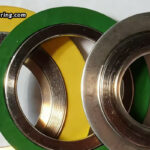
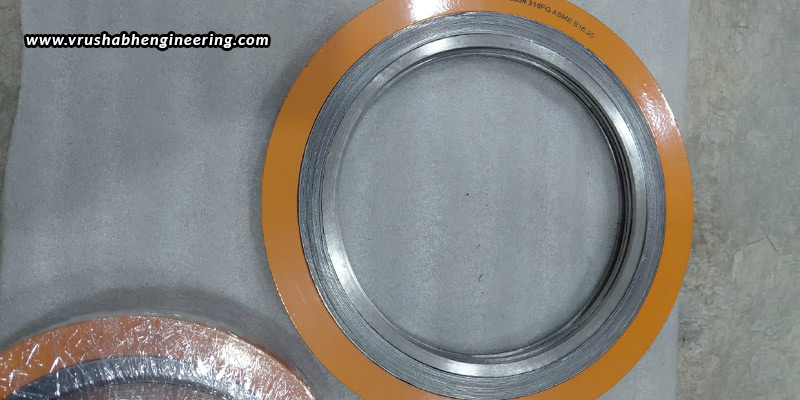
Spiral wound gaskets consist of a V-shaped metal winding, a soft filler, and optional inner or outer rings. This deliberate design achieves an optimal combination of flexibility and structural integrity, ensuring dependable sealing in various industrial applications.
- Metal winding for structural resilience
The metallic strip, typically crafted from materials chosen for their strength, corrosion resistance, or thermal stability, serves as the main load-bearing framework. Its spiral configuration allows the gasket to function like a spring, helping it maintain sealing pressure even under conditions of thermal expansion, system vibrations, or slight flange movements.
- Filler material for conformability and tightness
The filler material is equally important. Acting as the softer layer between the spiral windings, it addresses micro-irregularities on flange surfaces, preventing any gaps that could result in leaks. Depending on the operational requirements, fillers can differ in temperature resistance, chemical compatibility, and compressibility.
- Rings for control and stability
The optional inner and outer rings aid in controlling compression, ensuring precise centring, and improving blowout resistance. The capacity to add or adjust rings is a significant aspect that enhances the gasket’s versatility across various system designs.
Collectively, these components form a sealing solution that is not only robust, but also inherently flexible, making it appropriate for a broad spectrum of system requirements.
Material flexibility
One of the most significant benefits of spiral wound gaskets is their ability to adapt to different materials. Nearly every element of the gasket can be modified to meet specific operational requirements.
- Customized metal selections
The metal strip is selected based on its thermal stability, resistance to corrosion, mechanical strength, and compatibility. Choosing the right metal guarantees that the gasket meets operational needs, preventing it from becoming vulnerable in high-performance or challenging industrial settings.
- Extensive range of filler options
Fillers can be selected to correspond with the medium flowing through the system, the temperature range, and possible chemical exposure. Their versatility ensures a reliable seal without early degradation.
- Adaptability equals universal compatibility
Since every component of a spiral wound gasket can be tailored, these gaskets fit seamlessly into various flange types, system pressures, and temperature conditions. This material flexibility is what qualifies them as a universal sealing solution for intricate systems.
This level of adaptability is further strengthened by manufacturers like Vrushabh Engineering, who specialize in any type of spiral wound metallic gasket, tailored to specific operational demands. Their ability to customize metals, fillers, and ring configurations ensures robust sealing performance across industries dealing with thermal, pressure, and chemical challenges.
Design variations
In addition to the materials, the physical configuration of spiral wound gaskets can also be adjusted to satisfy various flange and operational requirements.
- Basic spiral wound gasket with no rings
A basic spiral wound gasket that lacks rings is suitable for applications where controlled compression is not as crucial. It depends on the flange for support and performs well in systems that emphasize adaptability, compressibility, and moderate sealing requirements.
- Spiral wound gasket with outer ring
A spiral wound gasket featuring an outer ring offers enhanced centring and serves as a compression limiter. This design improves installation precision and guarantees consistent sealing pressure under different conditions, thereby minimizing the chances of misalignment.
- Spiral wound gasket with inner ring
A gasket that includes an inner ring provides superior structural stability, reduces filler extrusion, and prevents inward buckling. It is particularly well-suited for high-pressure or temperature-variable applications that demand increased durability and dependable long-term sealing performance.
- Spiral wound gasket with inner and outer rings
A spiral wound gasket equipped with both inner and outer rings maximizes sealing reliability by evenly distributing stress. This complete ring design safeguards against thermal fluctuations, mechanical changes, and challenging operating conditions, ensuring robust and consistent performance.
Through these configurations, spiral wound gaskets can be accurately aligned with the flange design, compression requirements, and operational challenges.
Performance across diverse operational conditions
Despite the significant variations in system environments, spiral wound gaskets consistently remain reliable due to their performance attributes.
- Exceptional resilience to thermal cycle stress
Spiral wound gaskets effectively manage the expansion and contraction resulting from temperature changes with outstanding resilience. Their spring-like design accommodates thermal movement, ensuring that the gasket retains its sealing integrity even amidst frequent or extreme thermal cycling.
- Strong resistance to pressure variability
The metal windings impart the strength necessary to endure pressure fluctuations without deformation. By maintaining seating stress, the gasket effectively prevents leakage and ensures dependable performance, even when subjected to sudden or repeated pressure changes in demanding systems.
- Compatibility with a wide range of mediums
By strategically selecting winding and filler materials, spiral wound gaskets can be tailored for use with liquids, gases, vapours, or inert substances. This adaptability guarantees reliable sealing across various media and operational conditions.
- Vibration and shock absorption
The spiral design inherently absorbs mechanical vibrations and shocks that could compromise conventional gaskets. This capability reduces flange movement, minimizes the risk of misalignment, and promotes stable sealing in systems that experience continuous or irregular operational disturbances.
These performance features render them ideal for diverse systems that emphasize consistency and reliability.
Why spiral wound gaskets are considered universally adaptable
The universal adaptability of spiral wound gaskets is attributed to three fundamental technical features that influence their performance. Firstly, the metal winding and filler materials can be entirely tailored to satisfy the specific thermal, chemical, and mechanical needs of the application. Secondly, their design can be adjusted to include or exclude inner and outer rings, enabling engineers to align the gasket precisely with system requirements. Lastly, they provide reliable sealing performance across varying temperatures, pressure changes, corrosive conditions, and mechanical disruptions. Collectively, these attributes allow spiral wound gaskets to be the preferred sealing option in contemporary industrial systems that manage a variety of challenging operating conditions.
Spiral wound gaskets are essential for ensuring system stability, primarily due to their unparalleled adaptability. Their distinctive combination of flexible design, customizable materials, and established sealing reliability enables them to function effectively in a broad spectrum of operating conditions. As modern industrial systems advance – requiring enhanced efficiency, durability, and safety – the demand for sealing solutions capable of withstanding thermal cycling, pressure fluctuations, vibrations, and corrosive environments becomes increasingly important. Spiral wound gaskets consistently fulfill these requirements, establishing themselves as a reliable choice for engineers aiming for long-term system integrity and consistent performance in challenging applications.