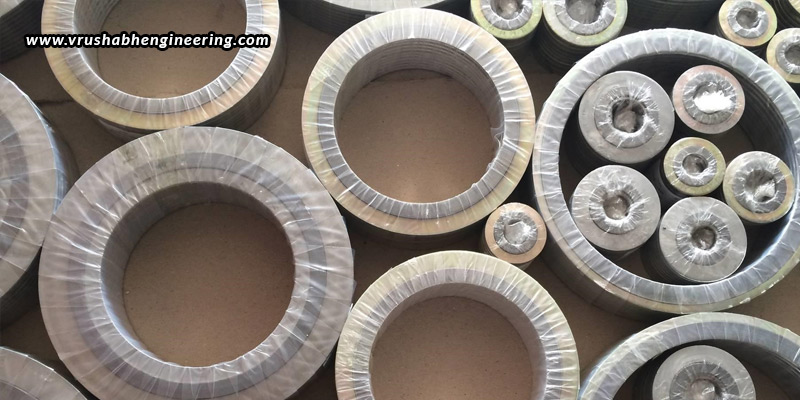
Spiral wound gaskets are designed to deliver dependable sealing in demanding operating environments, but their effectiveness hinges on the compatibility between the gasket and the corresponding flange. Proper alignment with flange surfaces, finishes, and standards is vital for achieving leak-proof performance, prolonging gasket lifespan, and ensuring operational efficiency. Grasping the concepts of flange compatibility, the impact of surface finishes, and how various standards influence gasket selection is crucial for optimizing the advantages of spiral wound gaskets. This guide delves into the technical aspects of flange compatibility, design modifications in spiral wound gaskets, and practical advice for installation and maintenance to guarantee an ideal fit.
The importance of flange compatibility
Flanges act as the connection points between different components in a system, and the junction between a flange and gasket is where sealing takes place. If the gasket does not correspond with the flange regarding size, finish, or standard, various problems can occur.
- Leakage: Even slight misalignment can create micro-gaps, jeopardizing the seal.
- Uneven compression: Incompatible surfaces result in uneven load distribution, shortening gasket lifespan.
- Premature failure: Stress concentrations at contact points can cause the gasket to deform or extrude.
- Maintenance issues: Frequent seal failures lead to increased downtime and replacement expenses.
Flange compatibility guarantees that spiral wound gaskets can deliver consistent compression, retain elasticity under dynamic loads, and withstand vibration, pressure, and thermal variations.
Key flange considerations
When choosing a spiral wound gasket, it is essential to assess several flange-related aspects.
- Flange type
Spiral wound gaskets are compatible with various flange types, such as raised face (RF), flat face (FF), and ring-type joint (RTJ) flanges. Each type of flange necessitates a gasket specifically designed to fit its sealing surface and ensure a dependable seal under pressure and bolt load conditions.
- Flange size and pressure rating
The gasket must match the flange’s diameter, bolt circle, and pressure class. Proper sizing is crucial for achieving adequate compression and sealing. Gaskets that are either too large or too small can result in uneven compression, leakage, or gasket failure, making accurate selection vital for the integrity of the system.
- Surface finish
The finish of the flange face significantly affects gasket performance. Spiral wound gaskets utilize a compressible filler to accommodate surface irregularities. A surface that is too smooth may hinder proper compression, while a surface that is excessively rough can damage the gasket. Choosing a gasket that is compatible with the specified surface roughness is essential for optimal sealing.
How spiral wound gaskets align with flange surfaces
The design of spiral wound gaskets ensures excellent compatibility with different flange surfaces:
- Filler material compressibility: Compressible fillers like graphite or PTFE conform to surface irregularities, compensating for minor flange flaws and ensuring a reliable seal.
- Spring-like metal windings: The spiral design evenly distributes compressive forces, maintaining a consistent seal even when the flange surface has slight variations.
- Optional rings: Inner and outer rings enhance centring, prevent extrusion, and guarantee uniform load distribution, particularly on large or high-pressure flanges.
These design features enable spiral wound gaskets to provide effective sealing even when flange surfaces experience thermal expansion, vibration, or cyclic loading.
Adherence to flange standards
Flanges are manufactured in accordance with both national and international standards that specify dimensions, bolt patterns, and pressure ratings. Commonly referenced standards include ASME/ANSI, DIN, and ISO specifications. When selecting gaskets, it is essential to consider these standards to ensure proper alignment:
- Dimension matching: The gasket must correspond to the flange’s outer diameter (OD), inner diameter (ID), and bolt hole spacing to achieve uniform compression.
- Pressure class compliance: Gaskets should be rated to withstand the flange’s pressure class, preventing blowouts or deformation.
- Face type compatibility: Flanges that are raised, flat, or tongue-and-groove necessitate specific gasket configurations for optimal sealing.
By comprehending and adhering to these standards, spiral wound gaskets can be accurately sized and positioned, minimizing installation errors and enhancing reliability.
Material and design considerations for compatibility
The compatibility of flanges is intricately connected to the material combination and design of the spiral wound gasket:
- Metal selection: Stainless steel windings provide corrosion resistance and flexibility, facilitating alignment with flanges subjected to moderate thermal expansion. Carbon steel or nickel alloys may be utilized for flanges that operate under high pressure or high temperature.
- Filler material: Graphite fillers are suitable for rough surfaces and high-temperature applications, while PTFE offers chemical resistance for potentially reactive flange environments.
- Ring options: Inner rings safeguard against inward blowout, and outer rings help centre the gasket on the flange, ensuring proper alignment and compression across the sealing surface.
Selecting the appropriate combination enables the gasket to conform accurately to flange dimensions and surface conditions, ensuring a reliable seal over prolonged operational periods.
Installation guidelines for flange compatibility
Even the best gasket cannot perform effectively without proper installation. Following correct cleaning, inspection, alignment, and tightening procedures ensures a reliable, leak-free seal.
- Clean the flange surfaces thoroughly to remove debris, corrosion, and remnants of old gaskets, ensuring smooth, contaminant-free sealing.
- Inspect the flange carefully for any damage, warping, or irregularities that could compromise the gasket’s sealing performance under pressure.
- Position the gasket precisely, aligning it accurately with all bolt holes and flange edges to prevent misalignment and potential leakage.
- Tighten the bolts in a cross-pattern sequence, applying uniform pressure to achieve even gasket compression across the entire flange surface.
- Avoid over-compressing the gasket, as excessive pressure can damage the filler or windings, reducing sealing effectiveness and potentially causing failure.
Correct installation guarantees that the gasket maintains contact across the flange surface, evenly distributes compressive forces, and endures dynamic operational stresses.
Ensuring flange compatibility is vital for the performance of spiral wound gaskets. By taking into account the flange type, surface finish, standard dimensions, and pressure ratings, as well as selecting suitable metal, filler, and ring combinations, gaskets can achieve a precise fit that preserves sealing integrity under conditions of vibration, cyclic loads, and thermal changes. Proper installation and regular maintenance further improve performance and prolong gasket lifespan. When spiral wound gaskets are correctly matched with flanges, they offer outstanding reliability, durability, and operational efficiency, making them a trustworthy choice for dynamic systems that require consistent, leak-free operation. Partnering with trusted spiral wound gasket suppliers like Vrushabh Engineering ensures that the gaskets meet material, design, and flange compatibility requirements, delivering reliable, leak-free performance in all operational conditions.