Spiral wound gaskets play a vital role in ensuring effective sealing within operational systems. Their adaptability, durability, and capacity to maintain a secure seal under dynamic conditions are primarily derived from the materials utilized in their fabrication. It is crucial to comprehend how various combinations of metals, fillers, and ring options impact gasket performance to achieve optimal reliability, longevity, and system efficiency. This blog delves into the technical principles of material selection, the effects of different metals and fillers on sealing performance, the significance of optional inner and outer rings, and practical considerations for selecting the appropriate combination for general applications.
Overview of spiral wound gasket construction
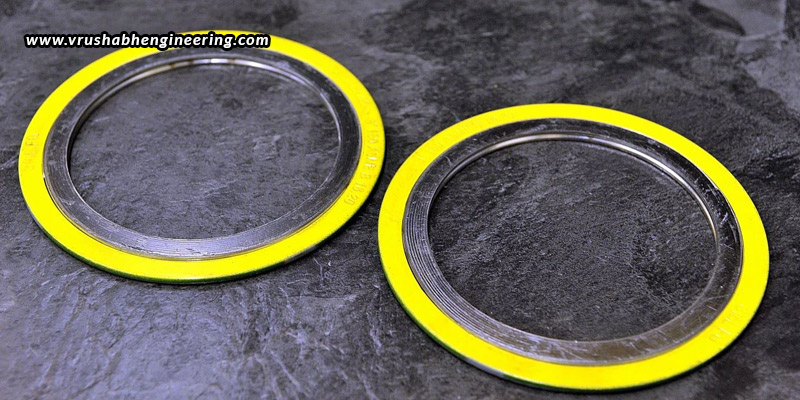
Spiral wound gaskets are made up of alternating layers of metal and filler material wound in a spiral formation. This design strikes a balance between mechanical strength and flexibility, allowing the gasket to conform to surface irregularities while sustaining compressive force under varying operational conditions. The essential components include metal windings that deliver structural integrity and resilience, filler material that provides compressibility and adaption to minor flaws on the flange surface, and the inner and outer rings that improve centring, prevent blowout, and regulate compression. The interplay of these materials dictates the gasket’s performance under different pressures, temperatures, vibrations, and thermal cycles.
The role of metal windings in spiral wound gasket performance
Metal windings serve as the essential framework for spiral wound gaskets. They function like a spring, absorbing movement within the system and evenly distributing the compressive load across the flange surface. The type of metal chosen plays a crucial role in determining mechanical strength, temperature resistance, and chemical compatibility. The common metal options include:
- Stainless steel: Provides outstanding corrosion resistance, good strength, and versatility, retaining structural integrity under temperature variations
- Carbon steel: Offers a budget-friendly choice for less demanding conditions, with sufficient mechanical strength and elasticity
- Nickel alloys: Perfect for high-temperature settings and harsh chemical environments, although they tend to be more costly
The thickness, hardness, and alloy composition of the metal affect the gasket’s ability to withstand deformation, vibration, and cyclic loading. Proper selection ensures consistent compression, reduces stress concentrations, and prevents leakage.
How filler materials impact spiral wound gasket efficiency
Filler materials are essential for providing the necessary compressibility to adapt to surface irregularities and improve the sealing effectiveness of the gasket. The selection of filler influences chemical resistance, temperature tolerance, and long-term durability. The key filler options include:
- Graphite: Known for its high compressibility and resilience, graphite can withstand elevated temperatures and offers chemical resistance across a broad pH spectrum. It is particularly suitable for systems that undergo thermal cycling.
- Polytetrafluoroethylene (PTFE): This material provides outstanding chemical resistance, low friction, and moderate temperature tolerance. PTFE is especially great for environments with harsh chemicals or where low torque installation is preferred.
- Aramid or Synthetic Fiber Composites: These materials offer compressibility and mechanical strength at moderate temperatures, making them suitable for general sealing applications.
The effectiveness of the gasket in enduring thermal expansion, pressure variations, and vibrations is determined by the combination of the filler and the selected metal winding. For instance, a stainless-steel winding paired with a graphite filler offers high-temperature resilience and mechanical strength, whereas stainless steel combined with PTFE improves chemical resistance.
Enhancing spiral wound gasket reliability with inner and outer rings
The inner and outer rings are crucial for improving the performance and reliability of the gasket.
- Outer ring: The outer ring serves as a centring mechanism, ensuring the gasket stays aligned during installation. It provides extra structural stability during pressure variations, and regulates compressive load, preventing the filler material from extruding.
- Inner ring: The inner ring shields the gasket from inward blowout, especially in high-pressure situations. It enhances overall stability and load distribution, and guarantees uniform compression across the sealing surface.
Gaskets can have no rings, only inner, only outer, or both, depending on operational requirements. Choosing the right ring configuration enhances reliability, minimizes installation errors, and extends gasket lifespan.
How material combinations influence performance
The interplay between metal windings, filler materials, and ring configurations significantly affects the gasket’s performance in dynamic operating environments, which include:
- Vibration resistance: Metals with greater elasticity, when combined with compressible fillers, absorb mechanical stress and minimize the likelihood of seal failure.
- Cyclic load endurance: Elastic metal layers in conjunction with resilient fillers enable the gasket to regain its shape after enduring repeated pressure or thermal cycles.
- Thermal expansion accommodation: Spiral designs featuring flexible fillers expand and contract alongside the system, while optional rings ensure alignment and consistent compression.
Choosing the right combination guarantees that the gasket can withstand mechanical, thermal, and chemical stresses without jeopardizing seal integrity.
Practical considerations for material selection
When selecting a material combination for general applications, several factors must be taken into account.
- Operating pressure: Elevated pressures necessitate stronger metals and possibly reinforced ring configurations.
- Temperature range: High-temperature operations benefit from graphite fillers or nickel alloys, whereas moderate temperatures may utilize PTFE or fibre fillers.
- Chemical exposure: Harsh chemicals require fillers such as PTFE or specialized composites to avert degradation.
- Flange surface conditions: Rough or uneven flange surfaces necessitate more compressible fillers to ensure an effective seal.
- Dynamic loads: Systems subjected to vibration or cyclic pressures benefit from elastic metal windings and resilient fillers to preserve integrity.
Aligning metal, filler, and ring configurations with these conditions optimizes performance, minimizes maintenance needs, and guarantees long-term reliability.
Common material combinations and their advantages
Selecting the right combination of materials depends on the specific operational requirements of your system, including temperature, pressure, and chemical compatibility. Consulting with a trusted partner like Vrushabh Engineering, one of the leading spiral wound gasket manufacturers in India, ensures you make the optimal choice, enhancing system reliability and longevity. However, here are some commonly utilized combinations for general applications.
- Stainless Steel + Graphite: Offers high temperature resistance, good chemical compatibility, and is suitable for varying loads.
- Stainless Steel + PTFE: Provides excellent chemical resistance, moderate temperature tolerance, and low friction for straightforward installation.
- Carbon Steel + Fiber Composites: A cost-effective choice, ideal for systems with moderate temperature and pressure.
- Nickel Alloy + Graphite: Best suited for environments that are high-temperature, high-pressure, and chemically aggressive.
The effectiveness of spiral wound gaskets is significantly affected by the combination of metals, fillers, and optional rings utilized in their construction. Grasping how these materials behave under pressure, temperature, vibration, and chemical exposure enables informed choices and optimal sealing performance. By thoroughly assessing operational requirements and selecting the right material combination, systems can attain long-term reliability, minimized maintenance, and consistent leak-free operation. When designed and installed properly, spiral wound gaskets offer unparalleled versatility and durability for general applications, establishing them as a dependable solution for contemporary operational systems.