Choosing the right gasket is essential for achieving leak-free operations, ensuring safety, and maintaining long-term reliability of systems. Among the many sealing options available, spiral wound gaskets are considered one of the most reliable choices for general industrial applications. Their capability to withstand a wide range of pressures, temperatures, and operational conditions makes them a favoured option for intricate and demanding systems. However, the effectiveness of a spiral wound gasket is significantly influenced by its proper selection. Key factors like the pressure class, temperature range, flange type, and operating conditions need to be thoroughly assessed. This guide offers a detailed overview of how to select the right spiral wound gasket, guaranteeing optimal sealing performance and prolonged service life.
Why proper gasket selection matters
Selecting an incorrect gasket can lead to leaks, early failures, frequent maintenance needs, and unexpected downtime. Inadequate selection may also cause uneven compression, material deterioration, or gasket blowout under pressure. Inadequate selection may also result in uneven compression, material deterioration, or gasket blowout under pressure, compromising both safety and system integrity. On the other hand, a correct selection guarantees consistent sealing performance, compatibility with operating pressure and temperature, resistance to chemical exposure, and extended service life with minimal maintenance. Thus, a systematic evaluation of selection criteria is crucial for reliable, long-term operation.
Key considerations
- Pressure class
Pressure class is a vital consideration when choosing a spiral wound gasket. It indicates the highest pressure the gasket can endure safely when installed correctly. A low pressure rating can lead to leakage or gasket failure, while over-specifying can incur unnecessary costs without providing additional advantages. The pressure class should correspond with the flange rating and the overall system design. Spiral wound gaskets are ideal for moderate to high-pressure scenarios due to their metal reinforcement and controlled compressibility. For higher pressure classes, it is often advisable to include inner and outer rings to avoid over-compression and to maintain gasket stability.
- Temperature range
The operating temperature significantly affects gasket performance and material stability. Spiral wound gaskets are effective across a broad temperature spectrum, but the choice of material must be compatible with system conditions. Some essential considerations include the maximum and minimum operating temperatures, temperature variations and thermal cycling, and the possibility of thermal expansion or contraction. The metal winding of a spiral wound gasket preserves structural integrity at high temperatures, while the filler material must keep its sealing capabilities without hardening, cracking, or degrading. Choosing the right filler is crucial for ensuring long-term performance.
- Operating conditions
Industrial systems frequently encounter vibrations, pressure variations, and thermal expansion, which makes the flexibility of gaskets crucial for effective sealing. Spiral wound gaskets excel in these dynamic situations because of their natural flexibility. Their spiral design effectively absorbs mechanical movements, while the metal windings ensure a steady sealing load, and the filler material adjusts to slight changes in surface finish and dimensions. In these operational settings, choosing the right combination of rings and materials is vital for obtaining a reliable and durable seal.
- Flange types and surface finish compatibility
The design of flanges is essential in the selection of gaskets, as spiral wound gaskets need to be appropriately matched to the flange configuration to achieve effective sealing. Although these gaskets can work with different types of flanges, it is important to take into account factors such as flange type, surface finish, and alignment. Configurations like raised-face, flat-face, and others necessitate a suitable gasket design to guarantee optimal performance. The flange’s surface finish affects sealing efficiency, and misalignment or a lack of parallelism can lead to uneven compression and possible leakage. Spiral wound gaskets that include outer rings are especially effective in ensuring precise centring and even load distribution on raised-face flanges, while inner rings provide additional protection against inward buckling and the extrusion of filler material.
- Design variations
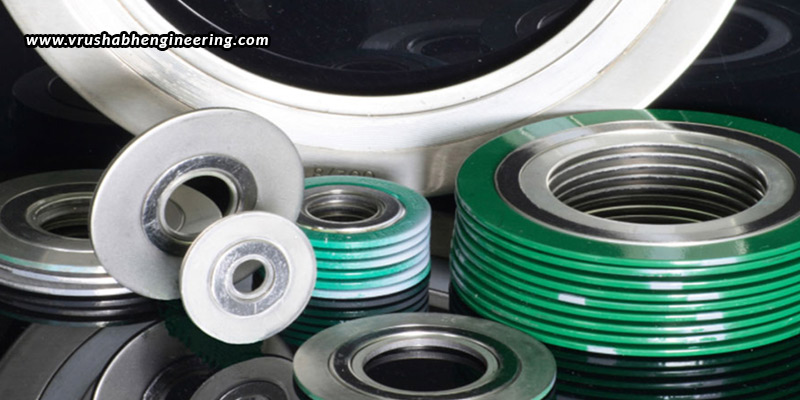
Spiral wound gaskets come in various configurations, each tailored to fulfill specific application needs. Gaskets that lack rings are ideal for situations where compression can be accurately managed. In contrast, those equipped with an outer ring assist in ensuring correct centring and preventing over-compression, while inner rings provide added stability and safeguard the sealing element against inward buckling or damage. Configurations that incorporate both inner and outer rings deliver the utmost sealing reliability and operational safety. The selection of configuration is mainly determined by factors such as pressure class, flange type, and the degree of stability necessary for prolonged operation.
Installation considerations and best practices
Even the highest quality gasket can fail if it is not installed correctly. The selection process should always take installation conditions into account. Flange surfaces must be clean and free from damage, bolts should be tightened in the recommended sequence to the specified torque, compression across the gasket should be uniform, and the gasket must be accurately aligned. Additionally, environmental factors such as temperature, vibration, and exposure to chemicals during installation should be considered to avoid premature failures. Proper handling techniques and using the correct tools also play a significant role in ensuring optimal gasket performance. Spiral wound gaskets can tolerate minor imperfections or variations, but proper installation enhances their sealing effectiveness and extends their service life.
Maintenance and lifecycle considerations
Choosing the right spiral wound gasket also contributes to long-term maintenance efficiency by reducing leakage and enhancing system reliability. The correct selection also reduces maintenance costs, and requires longer intervals between replacements. Proactive maintenance strategies, such as periodic inspections, cleaning of flange surfaces, and monitoring operating conditions, further ensure that gaskets maintain peak performance throughout their lifecycle. Regular inspections and torque checks also help prolong the lifespan and performance of gaskets. For those looking for high-quality spiral wound gaskets near me in Ahmedabad, Vrushabh Engineering offers a wide range of reliable solutions. Their gaskets are designed to meet diverse pressure classes, flange types, and operational conditions, ensuring long-lasting performance, minimal maintenance, and consistent sealing in industrial systems.
Common selection mistakes to avoid
- Selecting filler material without assessing chemical compatibility
- Neglecting flange surface finish requirements
- Using the wrong pressure class
- Disregarding the necessity for inner or outer rings
- Prioritizing cost over performance and durability
One or more of the above errors, along with failing to follow manufacturer recommendations, or skipping a detailed evaluation of flange types can lead to premature gasket failure, compromising system safety and efficiency. Avoiding these mistakes ensures consistent sealing, operational stability, and reduces the likelihood of leaks, maintenance interruptions, and unexpected downtime.
Selecting the right spiral wound gasket for general industrial applications necessitates a thorough assessment of pressure class, temperature range, flange type, and operating conditions. When chosen properly, spiral wound gaskets offer outstanding sealing reliability, versatility, and extended service life. Their capacity to merge mechanical strength with flexible sealing capabilities renders them an excellent choice for systems functioning under fluctuating pressure, temperature, and mechanical stress. By adhering to a systematic selection process and understanding essential design factors, businesses can guarantee leak-free operation, minimized maintenance, and sustained system integrity.